

T: +86-182-2202-9592
E: yuantai@yuantai-steel.com
E: yuantai@yuantai-steel.com
No.1 Science and Technology Road, DaQiuZhuang Industrial Zone, Jinghai, Tianjin, China 301606


Yuantaizam supplies hot-dip Zn-Al-Mg (ZM) coated steel coil for customers who need better corrosion
performance than conventional hot-dip gal
vanised coil, without moving to stainless steel. The coil starts as a cold-rolled carbon steel substrate and receives a zinc-aluminium-magnesium alloy coating. Magnesium is the key addition: it changes what forms on the surface when the coating corrodes. Where plain zinc tends to build loose, soluble corrosion products, the magnesium-bearing phases produce a denser and more stable layer that stays in place and keeps protecting the steel underneath.
That difference matters most where it is hardest to protect — cut edges, punched holes, scratches and bends, which are exactly the places where a damaged coating on ordinary galvanised steel starts to rust first.
We supply to EN 10346 (+ZM designation) and JIS G 3323, with ASTM A1046/A1046M as an alternative for North American projects. Learn more about how the coating works in our guide: What Is Zn-Al-Mg Coated Steel? A Practical Guide to ZM Steel.
Cut-edge protection — the coating continues to protect at sheared edges, where bare steel is exposed. Magnesium-bearing corrosion products build up at the exposed edge and slow the onset of red rust. Effectiveness depends on coating mass, edge condition and how aggressive the environment is.
Good corrosion performance in humid and polluted conditions — in neutral salt-spray and cyclic-corrosion testing, Zn-Al-Mg coatings generally reach red rust later than plain zinc coatings of comparable coating mass, which is why they are widely used in coastal, humid and light-industrial environments.
Scratch and abrasion resistance — the coating layer is harder than a pure zinc layer of the same mass, so it tolerates the handling, stacking and roll-forming that coil goes through before it becomes a finished part.
Good formability — suitable for roll forming, bending, profiling, stamping and light drawing. Coating adhesion is controlled so the layer resists flaking during forming; tight radii and heavy drawing are still worth testing on the actual tooling.
Weldability — suitable for resistance spot welding with adjusted parameters, as the coating has a different contact resistance from bare or galvanised steel. Electrode life and current settings should be confirmed on production samples.
Lower mass than solid stainless — for many outdoor components, a ZM-coated carbon steel part does the job of a heavier or more expensive stainless section, which is the main reason the coating is now standard in solar and agricultural structures.
| Standard | EN 10346 (+ZM), JIS G 3323, ASTM A1046/A1046M |
| Coating mass | ZM60 – ZM275 g/m² total (both sides); heavier on request |
| Material thickness | 0.25 – 4.0 mm |
| Coil width | 550 – 960 mm (other widths quoted on request) |
| Coating composition | Low-Al low-Mg approx. Zn-1.6%Al-1.6%Mg; high-Al high-Mg approx. Zn-6%Al-3%Mg. Actual chemistry is confirmed on the mill certificate |
| Surface treatment | Chromate-free passivation, anti-fingerprint, oiled or dry — confirmed per order |
| Coil weight | 3 – 8 t per coil, or as agreed |
| Delivery time | 15 – 30 days for standard coil; confirmed at order |
| Payment | T/T, L/C |
| Port | Tianjin Xingang (other Chinese ports on request) |
The same coating family carries a different designation depending on the market and the standard it is ordered to. Buyers comparing offers from different regions should check which of these a quotation follows, because the grade and coating mass printed on the mill certificate are what the material is actually inspected against.
| Market and standard | Zn-Al-Mg designation | What to check |
|---|---|---|
| Europe — EN 10346 | +ZM (e.g. DX51D+ZM, S350GD+ZM) | Coating mass is expressed as ZM60–ZM275 g/m² total, both sides |
| North America — ASTM A1046/A1046M | Type 1 (approx. 5–13% Al, 2–4% Mg); Type 2 (3% to under 5% Al) | Two distinct coating types exist — confirm which one the project specifies |
| Japan — JIS G 3323 | Grades SGMCC, SGMHC, SGMC340–SGMC570; coating designations K06–K45 | The Japanese Zn-Al-Mg product standard; grade follows the forming and strength requirement |
| Australia / New Zealand — AS 1397 | Type ZM (ZMa / ZMb under the 2021 edition) | The 2021 edition lowered the minimum aluminium content to 3% and split ZM into ZMa and ZMb |
Al-Zn coatings are a different product family from Zn-Al-Mg and are covered by separate standards. They are not interchangeable with ZM where cut-edge protection is the reason for the specification.
Hot-dip Zn-Al-Mg coil runs on a continuous line in five stages: surface preparation, coating, cooling, surface treatment and inspection.
The cold-rolled substrate is first cleaned, degreased and pickled so the coating can bond to a smooth, oxide-free surface. The strip then passes through the molten Zn-Al-Mg bath, where coating mass is controlled by gas wiping; this is the step that sets the ZM60–ZM275 designation. After the bath the coating is cooled under controlled conditions, because the cooling path affects the microstructure and therefore the corrosion behaviour. A surface treatment (passivation, anti-fingerprint or oil) is applied next, and the coil is finally inspected for coating mass, thickness, width and surface quality before packing.
Customers comparing coating systems usually ask the same three questions. Here is the short version:
| Coating | Typical composition | Where it fits |
|---|---|---|
| Hot-dip galvanised (Z) | Zinc | General outdoor and indoor steel, lowest cost per tonne |
| Zn-Al-Mg (ZMA) | Zinc + aluminium + magnesium | Humid, coastal and light-industrial environments; cut edges and formed parts that see moisture |
| Al-Zn (AZ) | Zinc + 55% aluminium | Roofing and cladding where heat reflection and long-term weathering matter more than edge protection |
The practical rule: if the part is cut, punched or bent and then left exposed, Zn-Al-Mg is usually the better of the three. If the panel is large and flat and mostly needs weathering, an Al-Zn product is often the smarter choice. If cost is the deciding factor and the environment is mild, plain galvanised coil remains adequate.


Coating mass is the specification decision that moves cost and service life the most. Matching it to the environment usually costs less than defaulting to the heaviest coating, and it is easier to justify to a project engineer.
| Coating mass | Typical exposure | Commonly specified for |
|---|---|---|
| ZM60 – ZM100 | C1–C2 — indoor, dry or low humidity | Enclosures, ducting, sheltered components |
| ZM100 – ZM150 | C2–C3 — sheltered outdoor, humid indoor | Purlins, framing, cable trays in general construction |
| ZM150 – ZM200 | C3 — outdoor with condensation or moderate pollution | Roof and wall substructure, agricultural buildings |
| ZM200 – ZM275 | C3–C4 — coastal, de-icing salt, light industrial | PV mounting, coastal structures, exposed formed parts |
These ranges are typical starting points for discussion, not a specification. The right coating is set by the actual exposure category (ISO 9223), the expected service life, and whether cut edges or fixing points will be left exposed. Tell us the environment and we will quote two coating masses so you can compare cost against service life.
Solar and PV mounting — purlins, rails, brackets and support frames for ground-mount and rooftop arrays, where the structure sees rain, condensation and long service without repainting. See Zn-Al-Mg coated steel pipe.
Construction — purlins, structural supports, wall and roof framing, metal roofing and wall panels, cable trays and infrastructure components.
Agriculture — livestock housing, poultry sheds, greenhouses and grain storage, where ammonia and constant humidity attack ordinary galvanised steel quickly.
Industrial equipment — enclosures, housings, cabinets and general fabricated parts for humid or lightly polluted plants.
Automotive and transport — underbody and structural parts that need corrosion resistance; coating selection for exposed body panels follows individual OEM specifications.
Coil vs slit coil — a slit coil is the same Zn-Al-Mg coil cut to a finished narrow width rather than supplied at full mill width. Most buyers need it slit to size, so send us your finished width and we slit to order. Searching “slit coil” or “slit coil steel” is how most buyers actually reach coil suppliers rather than sheet retailers — which is why the term belongs in a coil spec sheet.
Minimum order — Zn-Al-Mg coil is sold by the coil, not by the piece; a typical production run is several tonnes. Send your total quantity and we confirm the closest workable coil size and price.
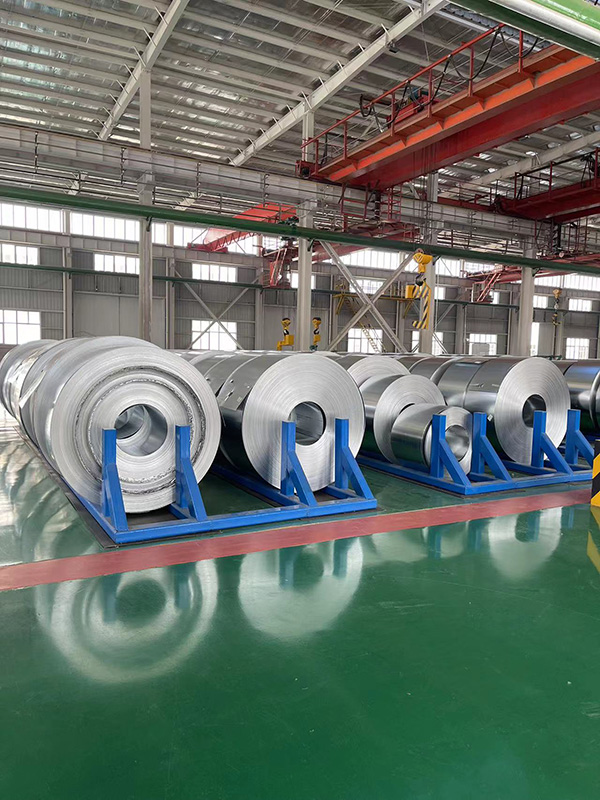
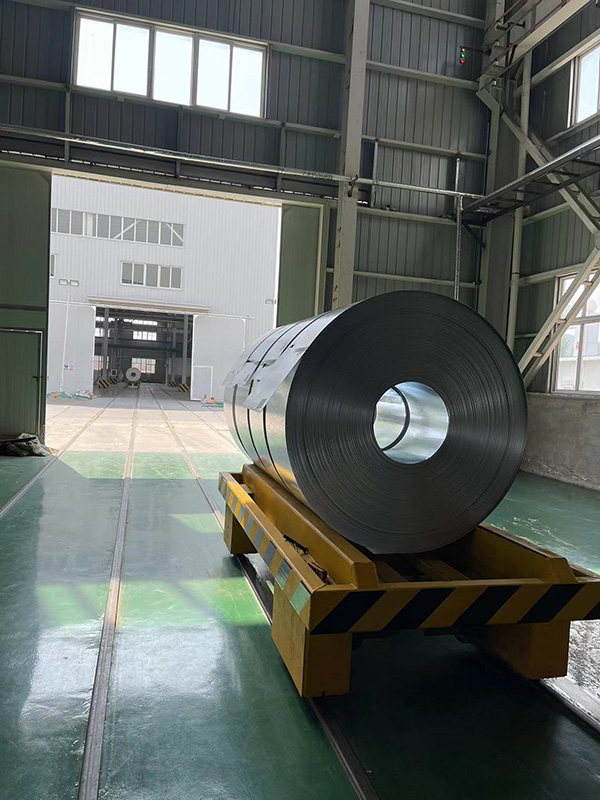
Manufacturer, not trader — Yuantaizam is a coil producer. We supply mill and production-line photos, welcome third-party inspection (SGS / BV) and live video calls from the shop floor, and issue EN 10204 3.1 mill test certificates tied to the actual heat. The registered company entity is verifiable on the public business registry before you order — we are happy to share the details.
Payment & lead time — T/T and L/C are both accepted; exact terms are confirmed per order and volume.
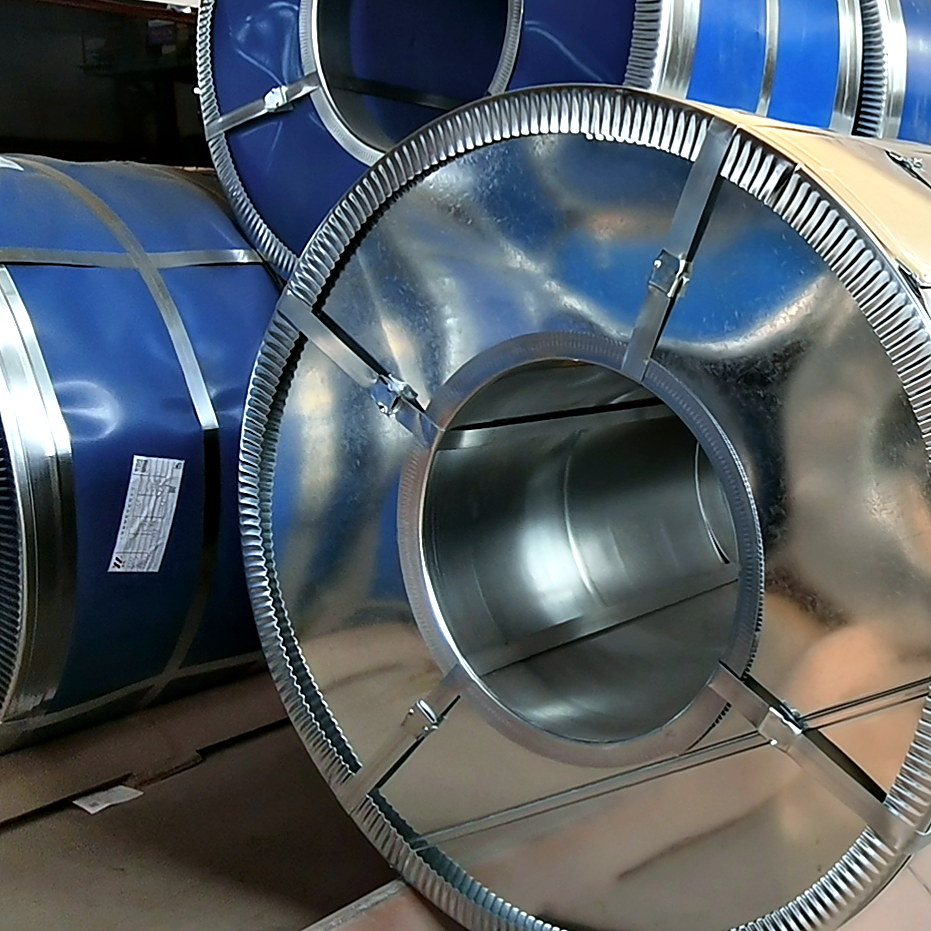
Packaging — standard export packing. Each coil is secured with two bands through the eye and one circumferential band; band contact points and coil edges are protected with edge protectors. The coil is wrapped in waterproof paper and fully metal-covered. Wooden pallets and iron packing are available on request.
Delivery time — 15–30 days for standard specifications after order confirmation, depending on quantity and destination. We confirm the actual schedule in writing before production starts.
Every coil is strapped through the eye and around the circumference, with the strap contact points and the coil edge protected, and the coil metal-covered over waterproof paper. Packing is matched to the route rather than applied uniformly — sea freight to a humid port and a short inland delivery do not need the same level of protection.

Storage & Handling
Coils are stored indoors on timber, clear of standing water and heavy traffic. Loading runs directly from the warehouse to the container, which keeps handling steps to a minimum — and fewer handling steps means less risk of edge and surface damage before the coil reaches your line.
Coils are supplied with a mill test certificate to EN 10204 3.1 covering chemical composition, mechanical properties and coating mass. Coating mass verification, dimensional records and coil traceability are included with each shipment. Third-party salt-spray and cyclic-corrosion test reports from accredited laboratories can be arranged on request — the specific test method and duration are agreed with you before testing, since results are only comparable within the same test standard.
Q:Is Zn-Al-Mg coil the same as galvanised coil?
A:No. Both are zinc-based hot-dip coatings, but Zn-Al-Mg adds aluminium and magnesium to the bath. The magnesium changes the corrosion products that form on the surface, which is why ZM coatings usually resist red rust longer than plain zinc coatings of similar mass, particularly at cut edges.
Q:What coating mass should I specify?
A:Match the coating to the environment rather than to the maximum available. C2–C3 conditions (sheltered outdoor, humid indoor) are commonly served by ZM100–ZM150; coastal or more aggressive exposure usually justifies ZM200–ZM275. We can quote both and let you compare cost against expected service life.
Q:Can Zn-Al-Mg coil be welded?
A:Yes, with adjusted parameters. The coating alters contact resistance, so welding current and electrode force generally need re-tuning, and electrode life is shorter than on uncoated steel. Confirm settings on production samples.
Q:Does the coating protect cut edges?
A:It helps. Exposed edges are the weak point of any metallic coating, and ZM coating forms protective corrosion products at the cut, which delays red rust compared with plain galvanised steel. The delay depends on coating mass, edge quality and environment — it reduces maintenance, but it is not a permanent seal.
Q:Do you provide test reports?
A:Yes. A mill test certificate to EN 10204 3.1 goes with every order, and third-party salt-spray or cyclic-corrosion reports can be arranged. Tell us which standard the test needs to follow.
Q:Are you a factory or a trading company?
A:We are a manufacturer of Zn-Al-Mg coated steel coil. We can share mill and production-line photos, arrange third-party inspection (SGS / BV) or a live video call from the shop floor, and issue EN 10204 3.1 mill test certificates linked to the specific heat. The registered company information is available for verification on the public business registry before you place an order.
Send us the coating mass, material grade, thickness, width and destination port, and we will confirm availability and a working price. Samples of the coil and coating cross-section can be arranged for evaluation before you commit to a production run. Request a quote.


